Tuesday, 16 December 2014

Sentiments towards God do not last - our promises do!


The gospel for today really follows on from yesterday’s gospel when chief priest and elders are questioned by Jesus regarding John the Baptist’s authority. They could not answer Jesus out of fear. So the parable of the Two Sons answers them indirectly.

The sons represent two groups of people. In the context of the gospel they are sinners who repent, and Israel’s leaders who refuse the Baptist’s message (even when tax-collectors and harlots do!).

So the son that initially says “no” to his father, but later thinks better and actually does what the father wants him to do, are the sinners who repent. The other son who initially says “yes” to his father, but does not actually do what his father wants, are the chief priests and elders. They talk a good game, but they do not actually live it out.

All of us for whom our faith is very important need to be reminded of this teaching of Jesus. It is easy to say “yes” and not follow through, especially if we get caught up in a sentiment towards God. Then we might promise all sorts of things; whereas sentiments do not last, our promises to God do. Following through on our promises is hard work and we do not usually have the motivation of warm feelings all the time, yet it is of utmost importance lest we find that we actually deserve the title hypocrite!

Fr Ian


Monday, 15 December 2014

Rejoice - repentance then joy


Gaudate Sunday is the Sunday in Advent we think about rejoicing and about joy. But why do we have a day which has the theme of rejoicing during a season of the Church which is a penitential season – a season about making paths straight, about repentance, about turning away from sinful habits in order to be prepared to welcome the Messiah. It seems a contradiction. Surely Advent is a season of mourning, of weeping, of being sad?

However this is a mistaken way of thinking. It is in fact the way in which the modern secular world regards religion. The modern secular world regards religion to be about restricting freedom, about rules, about being strict, about being uptight, about not doing what you want to do. Sound familiar?

But we really need to wake up to the fact that this is a lie. It is a convenient lie that justifies people in ignoring religion, and not least Christianity.

We have been exploring this particularly in the course I started recently on Theology of the Body, at the chaplaincy. What this course engages with is that of the Church’s teaching on sexual morality, chastity and marriage. And one couldn’t pick an area of church teaching that is more misunderstood and misrepresented and hated than Catholic sexual ethics! People truly believe that the Church’s teaching is all about rules of “do not do this…do not do that…” Theology of the Body is not like that however, it views the teaching of the Church first of all from the standpoint of love, and it reveals the Church’s teaching as Good News.

In Theology of the Body we learn why the Church teaches what she teaches and why it is Good News. And it is a joyful revelation; and a revelation that truly sets us free. We’ve also discovered how miserable the world’s approach to sex makes people, and that they really need this Good News; in other words it has made us want to be evangelists of this Theology!
But this isn’t restricted to this area of Church teaching alone. This is generally true of the whole Christian message.

Now this is partly our fault! And it is the fault of recent generations of believers!
People of faith have been too content to reduce their faith to a set of rules. And they have not taken the trouble to find out why the Church teaches what she does. And this is one of the reasons why Christianity has been waning in Europe and North America. People do not respond to rules – rules do not give joy, and they do not communicate Good News!
Rules do have some advantages, and of course we do need rules to keep order and to give us a sense of being together in a community. But they are also in a sense easy – easy to understand. It does not take too much effort to understand a rule. It is usually simple and straightforward. Take the obligation to go to mass on every Sunday for example. It is easy to understand – there is just the question to obey it or not. But if we choose to be obedient (which we know we ought to be) then it doesn’t require any more studying of our faith to comprehend it. Yet there is a reason for the obligation. The Church does not require Sunday Mass attendance arbitrarily. It is in fact good news! The Church, as a good mother, calls all her children together on the Lord’s Day because the Lord wishes to bestow upon us His enormous and generous grace, to enable us to be truly liberated and healed from the misery, sadness and darkness of the world in which we live. It is the Lord’s Day and when we give ourselves to Him in true worship, He gives back far more than what we give Him. He transforms us. It is His design that makes every Sunday His day to offer this to us, and in doing so to transform every other day of the week, and the whole of our lives. Sunday mass is really good news! But it requires much from us!! And the truth is we are lazy, and we are grudging in what we want to give God.

Returning to the theme of Advent then, and the exhortation of John the Baptist to repent, we think of it in wholly negative terms. We think that that sounds miserable, that sounds as though it will make me sad. If I spend time examining myself, spend time thinking about my sins, then it will just make me a negative person and very sad; what we convince ourselves to think is that really we need to stop being so negative and start being a jolly person. So we paper over our sin, we forget about it, we leave it alone, we think that we know we’re not perfect but ‘no one is are they?’ We forget repentance and we ignore our sin. And we try to give ourselves a veneer of happiness – ‘we are free from that negativity, and now we can be happy.’ But the truth is that we are not really very happy at all! Below the surface of superficial jollity we experience misery and sadness.

We can see this in the modern western world we live in. Where is the joy? There is entertainment which is fleeting happiness, but when it is gone we feel even emptier inside!
And the reason for all this is that we have not dealt with the root causes of our problem. The root causes of our problem is within us, and is indeed our sin. That is why when God became Man, when God condescended to become a human being, He was called “Jesus” because “He will save us from our sins.” It is at the very heart of our faith, that the source of our problems is sin.

The Good News is repentance! Repentance is good news because we can actually deal with the problem of sin and really get rid of it! That is what the grace of Christ does for us. But it doesn’t happen without some effort on our part. We must be bothered, we must make the effort, we must not paper over our sin, we must look at it, confess it with sorrow, but then open ourselves to receive forgiveness and healing. And so repentance is good news not least because it gives us joy. Because when we empty ourselves of sin through the gift of Christ, we make room for Christ Himself to dwell within us. And if Christ dwells in us we are truly free, we are truly at peace, we are truly happy. Nothing in all creation can give us real and lasting happiness and joy and peace. Only God can do that, only God in Christ by the Holy Spirit can do that for us. This is the truth. This is the Good News! And it is joyful! Believe in it, my brothers and sisters. The world lies to us when it says dealing with your sin will only make you negative. There are tears on the way but they become tears of joy and happiness, and if we have real peace in our hearts – no one will be able to take that away from us.

So we keep Advent as a season of penitential preparation for Christmas not because we need to punish ourselves a bit before having a jolly festival! Advent reminds us that in order to have real deep and lasting joying we need to repent, and clear out our sin, in order to make room for God Himself, Emmanuel, to dwell within us. That, my brothers and sisters, is truly worth rejoicing about, truly what Gaudete Sunday is for – so now what about doing something about it?

IH


Friday, 12 December 2014

Excuses...

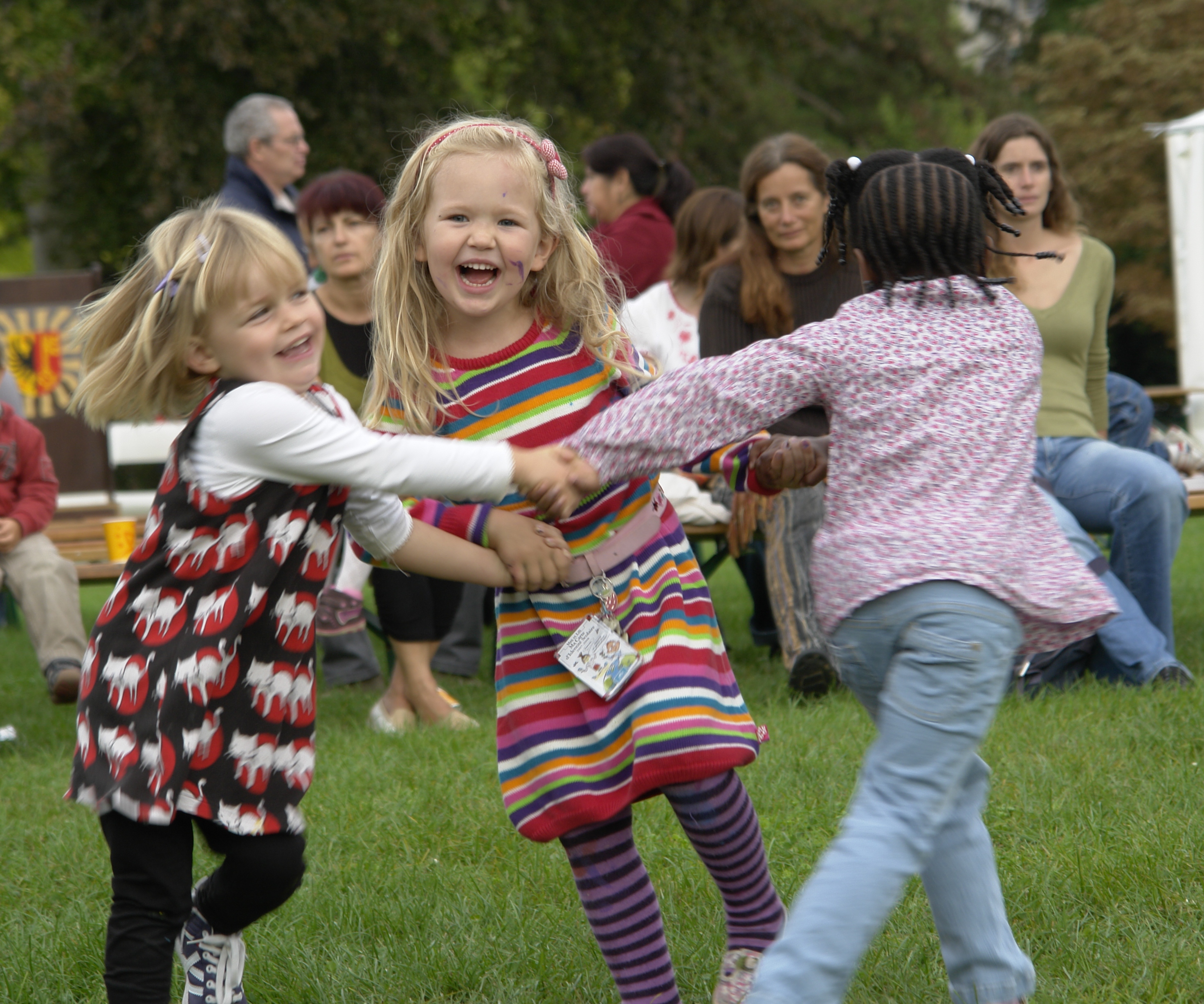
Children dancing

There are always excuses to not do what we know we ought to do; not least when we hear the still small voice of God and refuse to respond to His invitation. In the Gospel reading for today (Matthew 11:16-19) Jesus exposes such excuses. He uses a song of children:
We piped to you, and you did not dance; we wailed, and you did not mourn.
The piping refers to a wedding, of dancing and music, which is alluding to Christ’s own ministry. The wailing refers to a funeral where there is public mourning and wailing, which is alluding to St John the Baptist’s ministry.

Jesus’ contemporaries refused to heed the call of John to repent of their sins, to mourn because of their disobedience, self-centredness and waywardness. They also refused to respond to Jesus’ call to celebrate the presence of the Bridegroom, the Messiah, and to learn how to love God and their neighbour. They refuse invitations to embrace the Kingdom of God.


How often do we make excuses to not hear God’s call? How often do we tell ourselves, I haven’t sinned that badly, I don’t need to pay much attention to my sins and find ways of dealing with them? How often do we fail to love God with our whole heart, mind and strength? How often do we give God our second best, or third best – “oh that’ll do”? How often do we look on our neighbour as someone who gets in the way, or someone to be used, or someone to ignore? How often do we make such excuses and just carry on in our own way?

Fr Ian

Thursday, 11 December 2014

Second conversion

Jose de Ribera - Repentance of St Peter

Mt 11:11-15

Jesus greatly extolled the virtue of John the Baptist saying, “of all the children born of women, a greater than John the Baptist has never been seen…” John was called by God to be the last prophet that would prepare for the coming Messiah. John exhorted people to repentance, to conversion. The preparation needed was an inner change that would reject sin and embrace belief in the promises of God. This call to conversion is an essential part of the proclamation of the Kingdom, and Jesus exhorted people to “repent, and believe in the gospel”.

Since I left the Church of England and entered the full communion of the Catholic Church, many Catholics refer to me as a ‘convert’. Although as Abbot David explained to us at our Reception, strictly speaking converts are those who convert from one religion to another, or, from no religion to faith. We were not changing our religion; we were being reconciled with the Holy See. Our baptism was valid and good, and after accepting all the Catholic Church proposes for our belief we were then entering into full communion. That was helpful to all of us entering the Catholic Church because it didn’t feel we were denying the good things of our life in the Church of England but embracing a more complete Christian faith. It wasn’t a new faith but it was fuller, more integrated and had a bigger vision than we had known as Anglicans.

However, without contradicting what I had said about converts, there is a sense in which all Christians are converts! Christ’s call to conversion, as the Catechism says (CCC 1427-9), continues to be at play in our lives. The major conversion is our baptism. The ongoing conversion of our lives according to the gospel is what the catechism calls the second conversion. The whole Church is about this and it is an ongoing purification throughout life, and if necessary on into Purgatory. It is cooperation with the grace of Christ in His Church, and most especially through the gift of the Sacrament of Penance.

St Peter, of course, is a very good example of this. For though he had professed Jesus as His Lord and Saviour, and the Son of the Most High, yet Peter denied his Master three times. After repenting with tears, he went on to give a threefold affirmation of love for Christ.

                …there are water and tears: the water of Baptism, and the tears of repentance. St Ambrose

So in this season of Advent especially, let us hear and take to heart the exhortation to conversion. Let us make use of the gift of the Sacrament of Penance, and remember we are all, in a sense, converts!

Fr Ian

Wednesday, 10 December 2014

Freedom - a wonderful message for Christmas


This is a wonderful message. It is a message of faith and hope. As we see western society fall further and further from the Christian vision, and increasingly order itself in a godless way, it is very easy to think there is no hope for us or our children. This video is a beautiful reflection of the truth of our faith, and the real meaning of freedom.

Every blessing,
Fr Ian

Tuesday, 9 December 2014

The Church must reach out to seek the lost


Matthew 18:12-14  Parable of the Lost Sheep

Our Lord is often referred to as a shepherd. This particular parable alludes to the messianic prophecy of Ezekiel (34:11-31) in which God Himself would come down and shepherd His people, seeking them out and rescuing them:

Behold, I, I myself will search for my sheep, and will seek them out. As a shepherd seeks out his flock when some of his sheep have been scattered abroad, so will I seek out my sheep; and I will rescue them from all places where they have been scattered…

The parable is understood allegorically by St Anselm and St Hilary of Poitiers (both Fathers of the Church). The lost sheep represent mankind who had strayed through sin. The 99 sheep on the hills are the angels of God in heaven. In the Incarnation, God the Son descended ‘from the hills’ (i.e. from heaven) to seek the lost souls of men and to rescue them through His death and resurrection. And so Christ restores men to grace and leads them back to the company of angels in heaven (see Heb 12:22).


This shepherding of lost souls to safe pastures continues in the Church, for Christ continues to operate through the Church, His mystical Body. As the parable reminds us, “it is not the will of my Father who is heaven that one of these little ones should perish.” (v.14) So too in the Church, we must never cease to reach out to the lost, and be ready to shepherd them and provide them with the grace won by Christ in our redemption. As we await our coming Saviour, we have been given the gift of time in order that the lost may be found.

Fr Ian


Monday, 8 December 2014

Full of grace


The Solemnity of the Immaculate Conception of Mary

“Hail full of grace”, is a unique greeting for nowhere else in Holy Scripture does an Angel address someone by a title rather than a personal name. What is the significance of this?

First, of course, it draws our attention to the uniqueness of Our Lady. She is favoured above all other women and all men except her son.

Secondly, the title “full of grace” does not express the depth of St Luke’s phrase in Greek. He could have used the same phrase he uses for Stephen in Acts 6:8 (“And Stephen, full of grace and power…”) but Luke used in Greek a different word (kecharitomene), in English it too is traditionally translated as ‘full of grace’. But the word Luke used for Our Lady reveals that not only was she full of grace in that moment (as Stephen was), but that God had previously filled her with grace. She has been and is now filled with divine life. That is the depth of meaning of the Greek word used by St Luke here.

God had provided Mary with an abundance of grace to prepare her to be the Mother of God. So we can see that Gabriel’s annunciation points us towards the Immaculate Conception. For in the doctrine of the Immaculate Conception of Mary we are taught that Mary was preserved from Original Sin and therefore was made to be like our ancient mother, Eve.

To understand the significance of this we must understand that Mary is the New Eve, the New “mother of all”. By Eve’s fall, and by Adam’s fall, sin entered the world, and through sin, death. So that all the children of Eve would inherit this fallen condition, this disharmony with God and His creation, and this inclination to sin that we call concupiscence. Mary alone, by the grace of Christ, was preserved from Original Sin and in the same state as the first Eve, so that she could become the “Ark of the New Covenant” the one woman capable of being the Mother of Christ the Son of God. The humanity provided by our Lady for Christ’s human nature was unstained by sin. How could it be otherwise? God could not become incarnate with a sinful human nature – it would be a contradiction. So Mary is the only woman able to be Mother of God.

However Mary still had a choice. Her free will had not been taken away. Yes she had been preserved from Original Sin by grace, but she still could sin just as Eve was able to sin. So in the annunciation the incarnation of God that would save humankind hangs upon the words of this young Jewish girl, Mary full of grace. Mary’s gives her consent. Mary’s fiat, her ‘yes’ crushed the Serpent who had obtained a ‘no’ from the first Eve. Mary’s Son would go on to comprehensively defeat the Serpent on the tree of the Cross. The first Adam had brought sin and death to the world by his cooperation in the Original Sin; the Second Adam would bring life and grace into the world through the New Eve’s full cooperation with grace, so that we too can be filled with grace and sin and death can be defeated in us.


So let us praise God for Our Lady full of grace, greatest of all creatures, and that we too might allow grace to fill our lives and give our ‘yes’ to God in all that we do and say. Amen.
Fr Ian

Reflections on Worship in Sacrifice