A blog of the Ordinariate Groups found in Devon and Cornwall: Torbay, St Austell and Buckfast.
Saturday, 27 December 2014
Christmas Masses
The Ordinariate in the Southwest wish all our readers and supporters a blessed and joyful Christmas Octave.
Buckfast Ordinariate Mission will be joining the community at their 10.30am Mass on the Feast of the Holy Family, and therefore there will be no afternoon mass.
On Sunday 4th January, the Mass will be at 3pm as usual.
Fr Ian
Friday, 19 December 2014
The desert shall bloom
![]() |
| The desert in bloom |
While listening to the Gospel (Lk 1:5-25) and also the first
reading at Mass today (Judges 13:2-7,24-25), I do not think it is easy to not
be moved by the plight of both women, whom people called “barren”. It was a
terrible label for any woman. Fertility, the ability to bring forth life, has
been the essence of marriage in almost every society (excepting our own in the
modern west) and the inability to have children is a terrible burden for any
married couple. And this burden perhaps falls most heavily upon women who are
constantly reminded through their menstrual cycle of their capacity to nurture
life within their bodies. Women are created with the gift of being tabernacles
of new human life. (Incidentally this is why in Catholic churches women
traditionally wear veils. All holy tabernacles are veiled in a Catholic Church:
the tabernacle behind the altar, the chalice, statues of Our Lady and thus also
all God’s daughters.)
Infertility was seen in their time as a sign of God’s
disfavour, but Elizabeth and Monoah’s wife, we hear about in Mass today, are
not the only childless women in salvation history who are made fertile by God’s
intervention. There was Sarah, Rebekah, Rachel, and Hannah. Thus John’s birth
falls in line with that of Isaac, Jacob, Joseph, Samson, and Samuel, all of
whom were representatives of the Covenant between God and Israel.
And John was to be a Nazarite from birth. The practical consequences
of this were that being consecrated he could not drink alcohol nor have his
hair cut. In many ways Nazarites were like Old Testament monks and nuns.
Nazarites could take lifelong or temporary consecration. John was to be a
Nazarite from birth and for his whole life. Nazarites could also be priests or
members of the laity.
The conception of John in a womb called “barren” also
symbolised his vocation as a desert prophet. For from the barren wilderness
would come forth a prophet proclaiming a message to prepare for the coming of
He who is the Life. Indeed the desert would blossom and bring forth truth,
beauty and goodness.
There is barrenness in all our lives. There are aspects of
all our lives I expect that are not bearing fruit, what should we do about them?
Like those courageous women of faith in salvation history we need to bring our
barrenness to God with all the faith we can muster and ask the Lord to make our
lives fruitful according to His Will. Perhaps we do not see how they can be
made fertile but God does not see things as we do!
Fr Ian
Thursday, 18 December 2014
A great joy, actually!
Over the years I have come across a number of people who
state their opposition to the reality of sin. When I served as an Anglican
clergyman various parishioners said that they didn’t believe in sin. When asked
to explain this, they said that “sin” was so negative and that talking about
sin just made everyone sad. When pushed further they agreed that this meant
there was no real need for salvation, and that they believed everyone went to
heaven.*
Resigning from the Church of England and entering the full
communion of the Catholic Church was motivated not least by the lack of
consistency in doctrine in the C of E and so being received into the Catholic
Church, I accepted joyfully its Magisterium (teaching authority). Yet I have
come to discover a similar problem in the Catholic Church! Many Catholics do
not believe sin is 'as bad as all that'. Many do not really think there is mortal
sin, or sin that is unto death. One reason why almost everyone who goes to Mass
receives the Blessed Sacrament is because many don’t really believe in mortal
sin. They just think God is a nice chap and of course He wants us to receive “communion”,
no matter what state our soul is in. This diminishing of sin in people’s minds
is extremely dangerous and is of course exactly what the Enemy wants us to
think.
If we want to know how dangerous sin is we simply need to
consider the Incarnation and today’s gospel reading (Matt 1:18-24). The Angel said
to Joseph in a dream, “You shall call his name, Jesus, for he will save his
people from their sins.” The very reason for the Incarnation, the reason that
God became man, is because of sin. Out of His great merciful love, God desires
to save us from our sins, and in order to do so, condescended to become Man. In
the Blessed and Immaculate Mary the divine and human nature were united in this
child, who was to be called Joshua,
or Jesus. His name means ‘God saves’, which is not only His mission but also
His identity.
Why on earth would God become man if sin were not serious?
Why would God condescend to unite Himself with our human nature, if sin were ‘not
that bad’ or ‘did not exist’?
The truth is sin is deadly. Sin causes disintegration. Sin
causes disintegration between our relationship with God, between our
relationships with fellow human beings, between our relationship with the whole
of Creation, and even the relationship between our body and spirit. Sin
is a comprehensive disaster! There is nothing else that does such a
comprehensive and damaging job as sin!
By saying this I am not being negative! By saying this, the
Church’s magisterium is not being negative! By saying this Christ is not being
negative! The first words of Christ’s first sermon was “Repent and believe!”
This was the proclamation of Christ after His Baptism, at the beginning of His
public ministry. And Christ went all the way to Calvary to definitively and completely deal
with sin.
Sin is immensely serious and comprehensively disastrous, but
we have the Good News that Christ has completely and entirely dealt with our
sin, and so His grace is sufficient for us to deal with sin in our lives. Christ has
given His Church the authority to absolve sin, especially mortal sin. “Those
who sins you forgive, they are forgiven…”, He said to the Apostles on Easter
Day.
We need to take sin immensely seriously but taking it
seriously does not mean wallowing in it or just being miserable, it means
dealing with it. So let us all repent, get ourselves off to confession, and let
us all have our sin dealt with by the grace of Christ in the Church. Dealing
with sin through the grace of Christ is actually a great joy!
Fr Ian
*Not everyone in the C of E thinks like this, there are many
good Christians who do believe in salvation from sin, but for me there were too
many who thought that this way of thinking was entirely compatible with
membership of the Anglican church.
Wednesday, 17 December 2014
A long list
When I was a country Rector in the Church of England I would
receive from time to time requests for information from our parish registers. Serving
traditional country parishes, the parishes were reluctant to part with their
ancient registers into the central diocesan archive, so it was not uncommon for
me to receive a request for a register search. Although they didn't always
arrive at convenient moments, in a way I quite enjoyed dusting off the old
registers and peering through their crisp pages. I was often struck by the beautiful
handwriting of all entries before the 1950’s and how the hand-writing went
downhill from there! But I was also struck how in the 19th and 18th
century so many entries contained signatures consisting of an X and alongside
the Rector’s annotation “the mark of…” For some people the researching of their
genealogy is very important to them.
Clearly for Matthew the genealogy of Jesus Christ is very
important. Today we hear the long list of names read out at mass (Matt 1:1-17).
We might think it a little boring. We might think there is nothing of
inspiration in today’s gospel. But we need to ask ourselves, “Why?” None of us
would miss these 17 verses if Matthew hadn't included them. Well the point is
that although we might not, Matthew’s
original hearers/readers did appreciate it. Matthew is establishing Jesus’ kingly
messianic credentials as he effectively states in verse 1: “The book of the
genealogy of Jesus Christ, the son of David, the son of Abraham.” He is
establishing that Jesus is in fact of the line of Abraham and of the line of
King David. God promised long before
that “kings” would stem from Abraham’s line (Gen 17:6) and later promised, in a
covenant oath, that David would always have a dynastic heir (2 Sam 7:16; Ps
89:3-4).
Matthew establishes for us Jesus’ earthly credentials while
not undermining His divinity. Jesus is of course not the biological son of
Joseph, but Joseph does accept Jesus into his family lineage. Matthew reminds
us of this at the end when he says, “and Jacob the father of Joseph the husband
of Mary, of whom Jesus was born, who is called Christ.” Despite the long list
of “the father of”, now at the end Matthew is preparing to reveal that Jesus
was miraculously born of the Virgin Mary, without the contribution of an
earthly father, but instead the Holy Spirit.
One final comment on this genealogy is to say that the
gospel here is ensuring we understand that Jesus is human as well as divine. It
doesn’t use that sort of language, but by establishing Jesus human ancestry we
can be in no doubt that His divinity did not exclude His human nature received
from Mary and he was part of an earthly family. This is the wonder of the Incarnation, which in this last week
before the great and solemn feast, we contemplate. God’s plan for the salvation
of mankind was worked out through the lives of real human beings. This is not
just for the past, but even now God has a part for us to play, in His great
plan.
Fr Ian
Tuesday, 16 December 2014
Sentiments towards God do not last - our promises do!
The gospel for today really follows on from yesterday’s
gospel when chief priest and elders are questioned by Jesus regarding John the
Baptist’s authority. They could not answer Jesus out of fear. So the parable of
the Two Sons answers them indirectly.
The sons represent two groups of people. In the context of
the gospel they are sinners who repent, and Israel’s leaders who refuse the
Baptist’s message (even when tax-collectors and harlots do!).
So the son that initially says “no” to his father, but later
thinks better and actually does what the father wants him to do, are the
sinners who repent. The other son who initially says “yes” to his father, but
does not actually do what his father wants, are the chief priests and elders.
They talk a good game, but they do not actually live it out.
All of us for whom our faith is very important need to be
reminded of this teaching of Jesus. It is easy to say “yes” and not follow
through, especially if we get caught up in a sentiment towards God. Then we
might promise all sorts of things; whereas sentiments do not last, our promises
to God do. Following through on our promises is hard work and we do not usually
have the motivation of warm feelings all the time, yet it is of utmost
importance lest we find that we actually deserve the title hypocrite!
Fr Ian
Monday, 15 December 2014
Rejoice - repentance then joy
Gaudate
Sunday
is the Sunday in Advent we think about rejoicing and about joy. But why do we
have a day which has the theme of rejoicing during a season of the Church which
is a penitential season – a season
about making paths straight, about repentance, about turning away from sinful
habits in order to be prepared to welcome the Messiah. It seems a
contradiction. Surely Advent is a season of mourning, of weeping, of being sad?
However this is a mistaken way of thinking. It is in
fact the way in which the modern secular world regards religion. The modern
secular world regards religion to be about restricting freedom, about rules,
about being strict, about being uptight, about not doing what you want to do.
Sound familiar?
But we really need to wake up to the fact that this
is a lie. It is a convenient lie that justifies people in ignoring religion,
and not least Christianity.
We have been exploring this particularly in the
course I started recently on Theology of the Body, at the chaplaincy. What this
course engages with is that of the Church’s teaching on sexual morality,
chastity and marriage. And one couldn’t pick an area of church teaching that is
more misunderstood and misrepresented and hated than Catholic sexual ethics!
People truly believe that the Church’s teaching is all about rules of “do not
do this…do not do that…” Theology of the Body is not like that however, it
views the teaching of the Church first of all from the standpoint of love, and
it reveals the Church’s teaching as Good News.
In Theology of the Body we learn why the Church teaches what she teaches
and why it is Good News. And it is a joyful revelation; and a revelation that truly sets us free. We’ve also
discovered how miserable the world’s approach to sex makes people, and that
they really need this Good News; in other words it has made us want to be
evangelists of this Theology!
But this isn’t restricted to this area of Church
teaching alone. This is generally true of the whole Christian message.
Now this is partly our fault! And it is the fault of
recent generations of believers!
People of faith have been too content to reduce
their faith to a set of rules. And they have not taken the trouble to find out
why the Church teaches what she does. And this is one of the reasons why
Christianity has been waning in Europe and North America. People do not respond
to rules – rules do not give joy, and they do not communicate Good News!
Rules do have some advantages, and of course we do
need rules to keep order and to give us a sense of being together in a
community. But they are also in a sense easy – easy to understand. It does not
take too much effort to understand a rule. It is usually simple and
straightforward. Take the obligation to go to mass on every Sunday for example.
It is easy to understand – there is just the question to obey it or not. But if
we choose to be obedient (which we know we ought to be) then it doesn’t require
any more studying of our faith to comprehend it. Yet there is a reason for the
obligation. The Church does not require Sunday Mass attendance arbitrarily. It
is in fact good news! The Church, as a good mother, calls all her children
together on the Lord’s Day because the Lord wishes to bestow upon us His
enormous and generous grace, to enable us to be truly liberated and healed from
the misery, sadness and darkness of the world in which we live. It is the
Lord’s Day and when we give ourselves to Him in true worship, He gives back far
more than what we give Him. He transforms us. It is His design that makes every
Sunday His day to offer this to us, and in doing so to transform every other
day of the week, and the whole of our lives. Sunday mass is really good news!
But it requires much from us!! And the truth is we are lazy, and we are
grudging in what we want to give God.
Returning to the theme of Advent then, and the
exhortation of John the Baptist to repent, we think of it in wholly negative
terms. We think that that sounds miserable, that sounds as though it will make
me sad. If I spend time examining myself, spend time thinking about my sins,
then it will just make me a negative person and very sad; what we convince
ourselves to think is that really we need to stop being so negative and start
being a jolly person. So we paper over our sin, we forget about it, we leave it
alone, we think that we know we’re not perfect but ‘no one is are they?’ We
forget repentance and we ignore our sin. And we try to give ourselves a veneer
of happiness – ‘we are free from that negativity, and now we can be happy.’ But
the truth is that we are not really very happy at all! Below the surface of
superficial jollity we experience misery and sadness.
We can see this in the modern western world we live
in. Where is the joy? There is entertainment which is fleeting happiness, but
when it is gone we feel even emptier inside!
And the reason for all this is that we have not
dealt with the root causes of our problem. The root causes of our problem is
within us, and is indeed our sin. That is why when God became Man, when God
condescended to become a human being, He was called “Jesus” because “He will
save us from our sins.” It is at the very heart of our faith, that the source
of our problems is sin.
The Good News is repentance! Repentance is good news
because we can actually deal with the problem of sin and really get rid of it!
That is what the grace of Christ does for us. But it doesn’t happen without
some effort on our part. We must be bothered, we must make the effort, we must
not paper over our sin, we must look at it, confess it with sorrow, but then
open ourselves to receive forgiveness and healing. And so repentance is good
news not least because it gives us joy. Because when we empty ourselves of sin
through the gift of Christ, we make room for Christ Himself to dwell within us.
And if Christ dwells in us we are truly free, we are truly at peace, we are
truly happy. Nothing in all creation can give us real and lasting happiness and
joy and peace. Only God can do that, only God in Christ by the Holy Spirit can
do that for us. This is the truth. This is the Good News! And it is joyful!
Believe in it, my brothers and sisters. The world lies to us when it says
dealing with your sin will only make you negative. There are tears on the way
but they become tears of joy and happiness, and if we have real peace in our
hearts – no one will be able to take that away from us.
So we keep Advent as a season of penitential
preparation for Christmas not because we need to punish ourselves a bit before
having a jolly festival! Advent reminds us that in order to have real deep and
lasting joying we need to repent, and clear out our sin, in order to make room
for God Himself, Emmanuel, to dwell within us. That, my brothers and sisters,
is truly worth rejoicing about, truly what Gaudete
Sunday is for – so now what about doing something about it?
IH
Friday, 12 December 2014
Excuses...
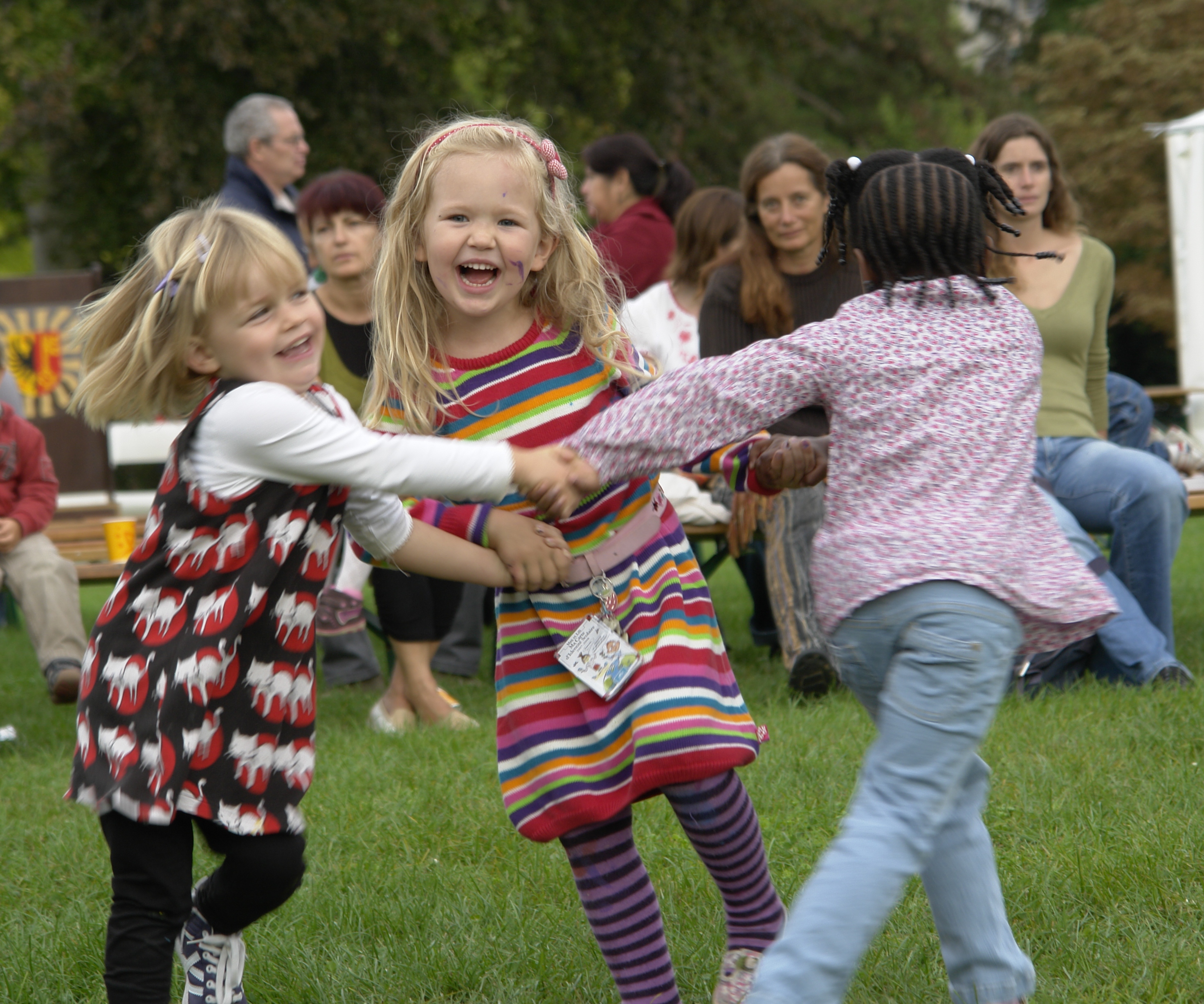
![]() |
| Children dancing |
There are always excuses to not do what we know we ought to
do; not least when we hear the still small voice of God and refuse to respond to His invitation. In the Gospel reading for today (Matthew 11:16-19) Jesus exposes
such excuses. He uses a song of children:
We piped to you, and you did not dance; we wailed, and you did not mourn.
The piping refers to a wedding, of dancing and music, which
is alluding to Christ’s own ministry. The wailing refers to a funeral where
there is public mourning and wailing, which is alluding to St John the Baptist’s
ministry.
Jesus’ contemporaries refused to heed the call of John to repent
of their sins, to mourn because of their disobedience, self-centredness and
waywardness. They also refused to respond to Jesus’ call to celebrate the
presence of the Bridegroom, the Messiah, and to learn how to love God and their
neighbour. They refuse invitations to embrace the Kingdom of God.
How often do we make excuses to not hear God’s call? How
often do we tell ourselves, I haven’t sinned that badly, I don’t need to pay
much attention to my sins and find ways of dealing with them? How often do we fail
to love God with our whole heart, mind and strength? How often do we give God
our second best, or third best – “oh that’ll do”? How often do we look on our
neighbour as someone who gets in the way, or someone to be used, or someone to ignore?
How often do we make such excuses and just carry on in our own way?
Fr Ian
Subscribe to:
Posts (Atom)
-
A group of Anglican nuns from the Community of St Mary the Virgin (CSMV) in Wantage, Oxfordshire, are to be received into the full co...
-
1 . St Mary Magdalene On Friday 22nd July the parish of Our Lady & St. Mary Magdalene, Tavistock, celebrated it's Patronal Festi...
-
On the solemn feast of Our Lord Jesus Chist, universal King, the Buckfast Ordinariate Group celebrated Sunday mass in a different location...